
A common misconception in DeFi is that gas optimization means finding the cheapest moment to press “confirm.” That is only the visible part of the problem. The larger opportunity is deciding which transactions should exist at all, what permissions they create, and how much future risk a small saving may introduce. A user who saves a few dollars by approving an unfamiliar contract, or who leaves a broad token allowance active for months, may be optimizing the wrong variable.
For US-based DeFi users, this matters because transaction fees can change quickly with network demand, while token approvals can remain in place long after a trade, liquidity deposit, or lending action is finished. The practical goal is therefore not simply low gas. It is controlled execution: understand the transaction, limit the authority granted to contracts, and spend fees where they meaningfully reduce risk.
The hidden mechanism behind token approvals
Most Ethereum-compatible tokens follow the ERC-20 model. Before a decentralized application can move a token from your wallet, you generally send an approve transaction to the token contract. That transaction records an allowance: a limit describing how many tokens a particular spender address may transfer on your behalf. The later swap, deposit, or repayment transaction uses that permission.
This creates an important distinction. Connecting a wallet to a website does not usually give the application the power to move tokens. An approval does. The approval is an on-chain permission, and it may survive after the browser tab is closed, the position is withdrawn, or the user stops using the application. If the approved spender is compromised, malicious, or incorrectly identified, an allowance can become an attack surface.
Many applications request an effectively unlimited allowance to avoid asking users for a new approval on every transaction. That can reduce friction and, in some cases, reduce repeated approval fees. But convenience changes the risk profile. A limited approval caps the amount that can be pulled by the spender; an unlimited approval shifts more of the security burden onto the contract, the application interface, and the user’s ability to notice problems.
The sharpest mental model is to treat an approval like a standing authorization, not like a one-time signature. It resembles giving a service permission to draw from an account up to a specified limit. The transaction that uses the permission may happen now, but the permission itself can remain relevant later.
Why gas optimization can conflict with security
Ethereum gas is a measure of computational work, while the fee paid in a transaction depends on gas used and the network’s fee conditions. Under the fee market used by Ethereum, the base fee responds to demand and an optional priority fee helps determine inclusion. A simple transfer, an approval, and a complex multi-step DeFi interaction therefore have different computational costs even when each appears as one confirmation in a wallet.
That leads to a trade-off. Reusing an existing allowance can avoid another approval transaction. Revoking an allowance usually requires a separate on-chain transaction, which costs gas. Replacing a broad allowance with a smaller one also costs gas because the permission must be updated on-chain. Security hygiene is not free, and the economically sensible choice depends on the value at risk, the chain being used, and whether the approval is still needed.
Revoking everything immediately is not automatically the best strategy. On a low-fee network, routine cleanup may be inexpensive. On a congested network, a user might reasonably prioritize revoking permissions associated with unfamiliar or high-risk contracts, while leaving a narrowly scoped allowance for a trusted application that is still actively used. The right decision is risk-adjusted, not ideological.
There is another subtle limitation: revoking an approval does not reverse transactions that already occurred. If a malicious contract has already transferred assets, setting the allowance to zero cannot recover them. Nor does a wallet warning prove that a contract is safe. Simulations and risk indicators are valuable decision support, but they depend on what can be observed and modeled. A transaction may still behave differently under changing on-chain conditions, unusual token logic, or a deceptive user interface.
A practical approval-management framework
Before signing, separate the transaction into three questions. First: what action is being requested? Second: which contract or address receives authority? Third: how long and how broadly should that authority remain active? This structure is more useful than relying on a single green or red label because it asks the user to inspect the mechanism rather than outsource judgment entirely.
For a routine swap, check whether the spender is the expected protocol component rather than merely the website name. Read the token and amount being approved. If the application requests a very large allowance for a small trade, pause and look for a more limited option when available. A large allowance is not proof of fraud, but it is a meaningful reason to understand what you are signing.
After the intended action, review active approvals periodically. A sensible schedule depends on behavior: frequent DeFi users may review permissions as part of position management, while occasional users can inspect them before and after using a new protocol. The priority should be allowances connected to applications no longer in use, unfamiliar spender addresses, abandoned experiments, and wallets that hold substantial balances.
For larger portfolios, compartmentalization is often more powerful than repeated caution. A wallet used for testing new protocols should not necessarily hold the same assets as a long-term storage wallet. A separate account for higher-risk experimentation can limit the consequences of a bad approval, although it does not eliminate the need to verify transactions. The principle is simple: reduce the amount exposed to each decision.
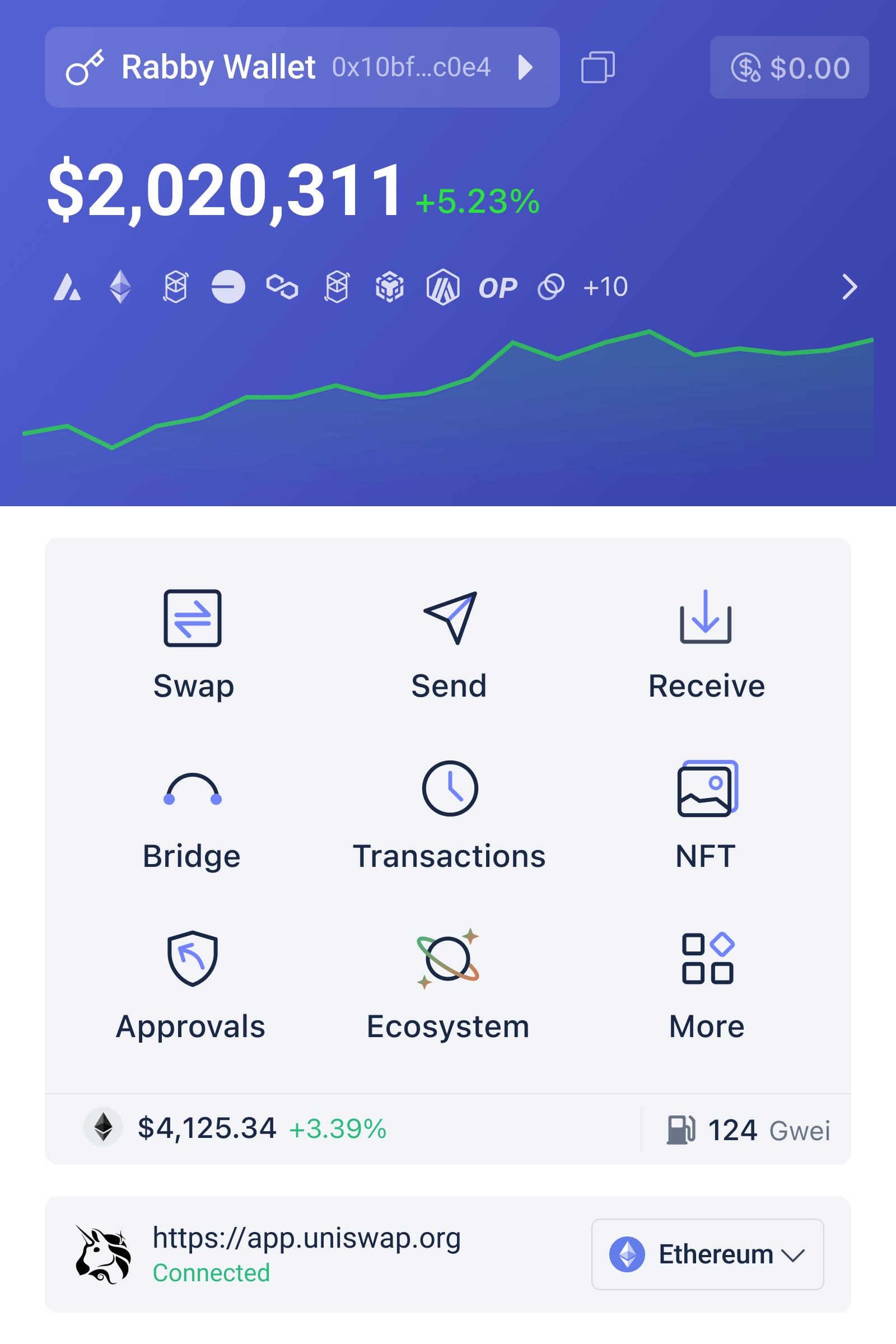
Users installing a browser wallet should obtain it through a source they can independently verify and should inspect the extension’s permissions and active account before interacting with DeFi. For readers evaluating the rabby extension, the useful question is not whether a wallet can make DeFi “safe.” No wallet can guarantee that. The useful question is whether its transaction review workflow helps you see contract calls, token movements, approvals, and potential warnings before signing.
What wallet simulation can and cannot tell you
Transaction simulation is one of the most useful bridges between technical blockchain activity and ordinary decision-making. In principle, a wallet can preview expected balance changes and flag suspicious or unexpected effects before a transaction is broadcast. This is especially valuable when a single DeFi action calls several contracts in sequence.
But simulation is a forecast of execution, not a security certificate. It may identify that tokens leave the wallet, yet it cannot by itself establish that the protocol’s economic design is sound, that an oracle will remain reliable, or that the website has not induced the user to choose the wrong contract. The preview answers “what may happen if this call executes under these conditions?” It does not fully answer “should I trust this system with my assets?”
Approvals also create a human-factors problem. Users tend to focus on the headline action—“swap,” “stake,” or “supply”—and treat the approval as administrative noise. Attackers benefit from that attention gap. A safer workflow makes the permission itself visible and asks whether the authorization matches the intended action. In other words, security improves not only through stronger code, but through better allocation of the user’s attention.
When should you optimize, and when should you wait?
Timing can matter for gas, especially on Ethereum mainnet during periods of heavy activity. If an action is non-urgent, comparing current fee conditions with a later window may reduce cost. Some protocols also support batching or permit-style signatures that can change the number of transactions a user sends. These designs can be efficient, but they introduce their own assumptions and should not be treated as universally safer.
A useful rule is to optimize in layers. First eliminate unnecessary actions: do not approve a token you will not use, and do not execute a failed or redundant transaction repeatedly. Next reduce unnecessary authority by choosing an appropriate allowance where the application supports it. Then consider timing, batching, or a lower-cost network. This order matters because a cheaper transaction that grants excessive permission may be a worse outcome than a more expensive transaction with a narrow, understandable scope.
Layer-2 networks can make approval maintenance more affordable, but “cheaper” does not mean “risk-free.” Users still need to verify the network, token contract, bridge assumptions, and destination address. Funds can also be stranded operationally if a user forgets which network holds an asset or sends tokens to an incompatible route. Lower fees make experimentation easier; they can also make careless experimentation more frequent.
What to watch next in DeFi wallet design
The likely direction of wallet design is toward more context at signing time: clearer explanations of permissions, better previews of balance changes, and stronger separation between an application’s visible brand and the contracts actually called. If those tools become more accurate and less noisy, users may be able to make better decisions without reading raw calldata.
The unresolved question is how much complexity can be compressed into a warning without creating false confidence. Too few warnings hide danger; too many train users to dismiss them. The strongest systems will likely combine machine-readable transaction analysis with user-controlled limits, separate accounts, and explicit approval policies. That is a conditional outlook, not a guarantee. Its success depends on accurate contract interpretation, thoughtful interface design, and users continuing to inspect unusual requests.
Frequently asked questions
Is an unlimited token approval always dangerous?
No. It creates broader potential authority than a limited approval, but the practical risk depends on the token contract, spender, protocol controls, wallet balance, and whether the application is still trusted and maintained. An unlimited allowance should be treated as a higher-exposure permission, not automatic proof of malicious activity.
Does revoking an approval refund the original gas fee?
No. Revocation is a new on-chain transaction and normally requires its own fee. It can prevent future transfers through that allowance, but it cannot undo transfers that already happened. Prioritize revocation according to the value exposed and the trustworthiness of the spender.
What is the safest way to manage approvals as a DeFi user?
Review the spender and amount before signing, use limited approvals when practical, inspect active permissions after using unfamiliar protocols, and keep higher-risk experiments separate from long-term holdings. Use wallet simulations and warnings as evidence to consider, not as substitutes for verifying the application and transaction.
Gas optimization is ultimately a discipline of reducing waste without losing control. The cheapest transaction is not necessarily the best transaction if it creates an invisible, durable permission. A stronger DeFi habit is to ask what the transaction costs today, what authority it creates tomorrow, and what would happen if the application stopped deserving trust. That reframes approval management from a tedious cleanup task into one of the clearest, most practical forms of wallet security.